
Below you will find recordings of presentations from our Speaker Series, in which leading scholars and experienced community researchers share their knowledge about the region’s suppressed history.

“Northern Men”
Greater Portland and the Illegal Slave Trade, 1830-1865, with Dr. Kate McMahon
June 26, 2024
In 1808, the United States made participation in the international slave trade a federal crime. However, Americans increasingly participated in this horrific and inhumane trade throughout the 19th century. Northern New England played a central role in the illegal slave trades to Brazil and Cuba during the 1830s-1860s. This talk will focus on three men from greater Portland—Samuel Trask, Rufus Soule, and Frederick Drinkwater—who organized and participated in this illegal trade, and whose stories exemplify American participation in the illegal slave trade. It will also explore the resistance by enslaved Africans, Black abolitionists, and other activists who embodied freedom making despite overwhelming odds.
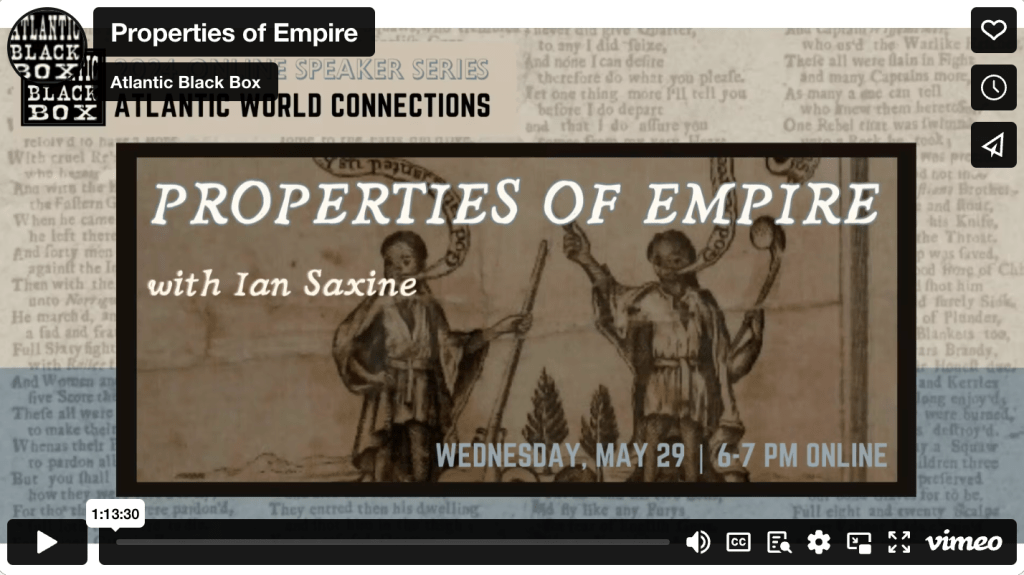
Properties of Empire
Conceptions of property among Wabanaki people & English-speaking colonizers, with Dr. Ian Saxine
May 29, 2024
The meeting of Wabanakis and English-speaking colonizers was a meeting of cultures. A crucial aspect of that encounter was the meeting of very different systems of property. Saxine’s research has focused on understanding the ways Wabanakis and different groups of colonizers thought about property, and the dynamic relationship between their ideas. English colonists didn’t introduce property to the American northeast: instead, they entered into established networks of Indigenous property. The result was a series of contests both between Wabanakis and English—and between different groups of colonists—to shape the shared understandings of property in the Wabanaki Dawnland.
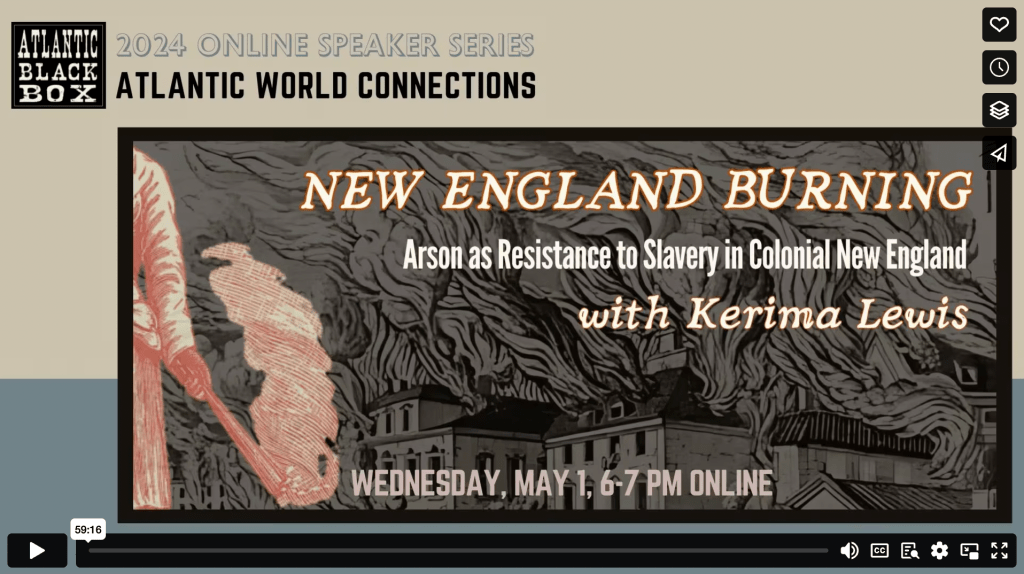
New England Burning
Arson as Resistance to Slavery in Colonial New England, 1650 – 1775, with Dr. Kerima Lewis
May 1, 2024
In colonial New England, enslaved men and women of African heritage worked out their lifetime servitude as domestic servants, maritime workers, skilled laborers, and farmhands. Faced with this unending forced labor, which was accompanied by brutal beatings and heavy legal restrictions, some struck back with force. Among the repertoire of resistance methods enslaved men and women devised to counter this unending oppression, acts of arson figured prominently from the early colonial period through the outbreak of the American Revolution.
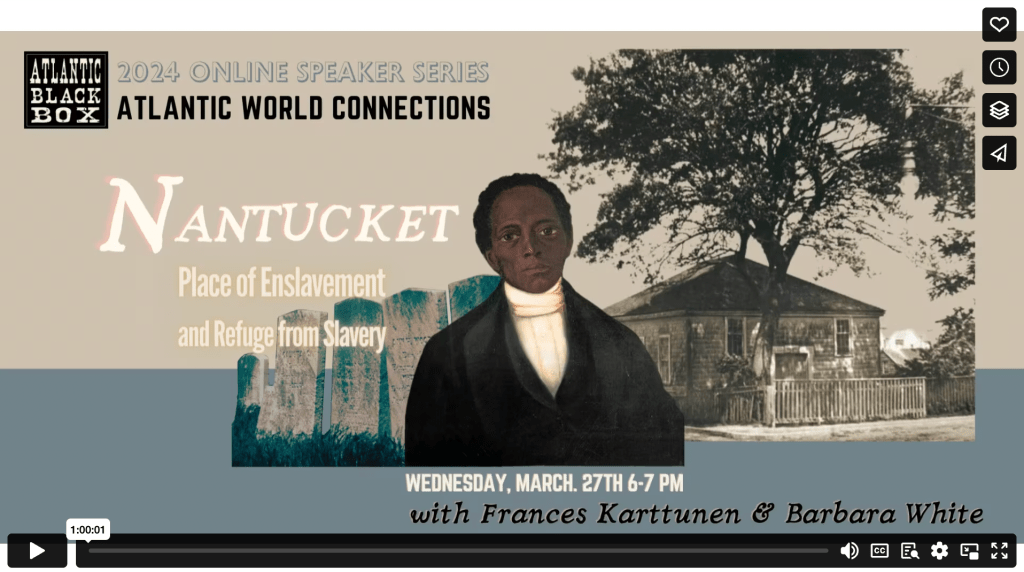
Nantucket
Place of Enslavement & Refuge from Slavery, with Frances Karttunen & Barbara White
March 27, 2024
Local researchers Frances Karttunen and Barbara Ann White have long participated in efforts to surface and share the history of Nantucket’s African-heritage community. In this presentation, they will offer an account of the men, women, and children enslaved on the island between 1700 and 1775 and share the stories of those who found refuge from slavery in this settlement known for its deep Quaker roots. In the 1840s, Nantucketers battled for six years over whether Black children should be allowed to attend the island’s white schools. Our presenters will describe the multiple strategies used by the Black community to resist slavery and fight for school integration over the centuries.
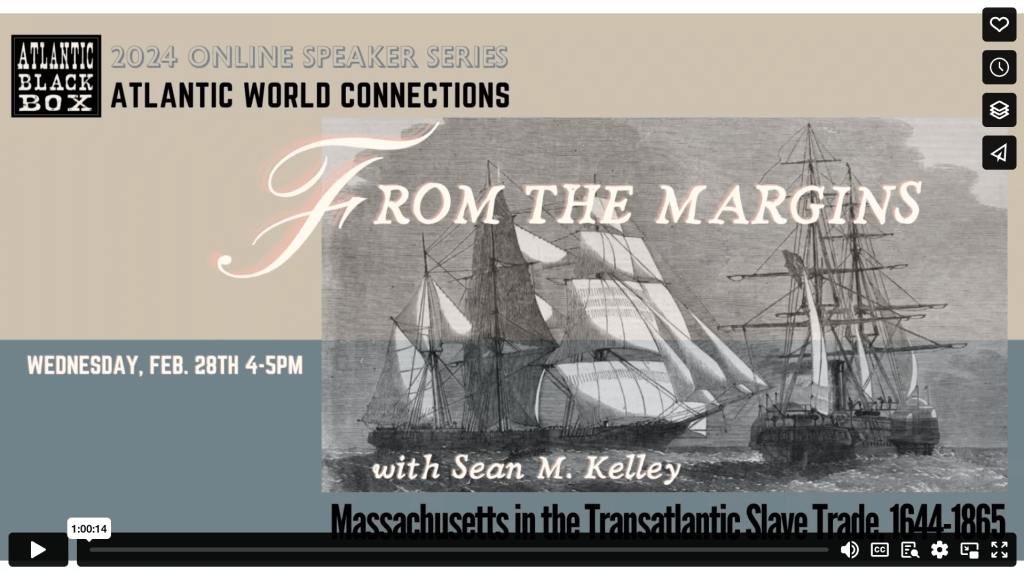
From the Margins
Massachusetts in the Transatlantic Slave Trade, 1644-1865, with Dr. Sean Kelley
February 28, 2024
A total of 305,000 enslaved Africans arrived in the New World aboard American vessels over a span of two hundred years as American merchants and mariners sailed to Africa and to the Caribbean to acquire and sell captives. The American-based transatlantic slave trade began in Massachusetts, and the colony/state continued its involvement into the Civil War. In this talk, historian Sean Kelley will chart the changing nature of the Bay Colony/State’s engagement with the transatlantic slave trade over more than two centuries.