
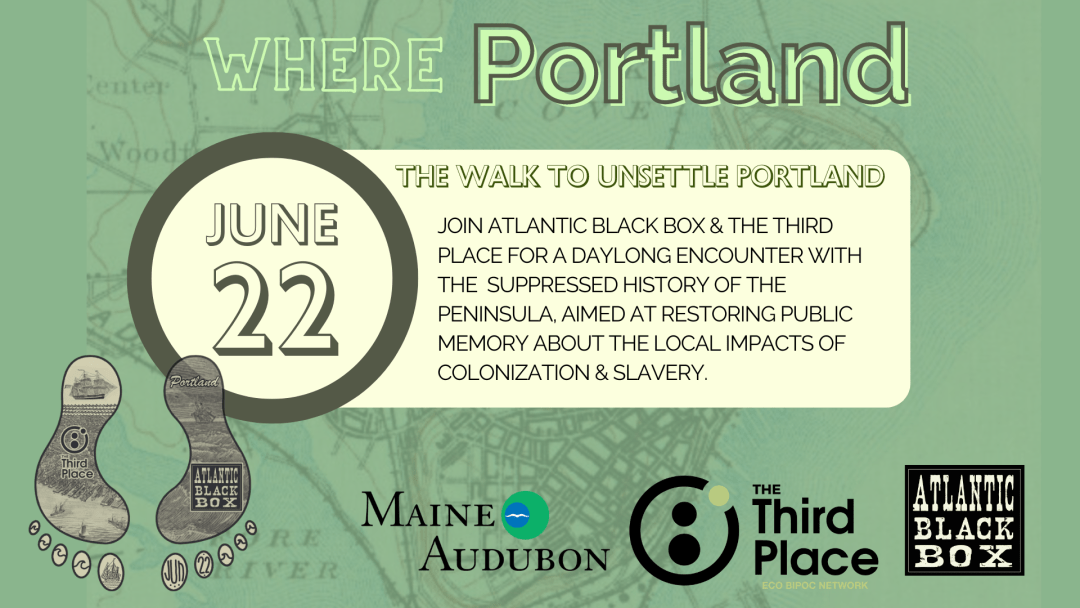
DATE: Saturday, June 22, 2024
TIME: 9:00 am – 3:00 pm
LOCATION: Payson Park, Portland to Maine Audubon, Falmouth
On Saturday, June 22, Atlantic Black Box and The Third Place’s EcoBIPOC Network invite you to join The Walk to Unsettle Portland, a daylong collective practice—at once physical, emotional, creative, and intellectual—in unsettling our understanding of this place by surfacing the suppressed stories of those who walked here before us. Please join us for all or part of the day.

The lands and waters that make up the place long known as Machigonne, now called Portland, have been home to Indigenous people for over 12,000 years. With the arrival of the first European vessels on these shores came people of African heritage, bringing with them their varied cultural practices, skills, and knowledge. Although Wabanaki and Black relationships to this land have differed greatly, both populations survived attempted genocide and enslavement through resistance and resilience. Both peoples contributed to defining the nature and character of this place in the face of colonialism and generations of oppression. But skewed settler narratives and white mainstream scholarship have worked to suppress these truths, which today remain largely absent from the commemorative landscape and from collective consciousness. It is only in confronting place ignorance that we can hope to cultivate inclusive and informed communities today, where all people can enjoy a deep sense of belonging.
Contributors include:
| The Third Place Atlantic Black Box The EcoBIPOC Network Maine Audubon The Prince Project Victoria Mansion Osher Map Library Place Justice Initiative Portland Public Schools | Maine Historical Society Bob Greene Dr. Kate McMahon James E. Francis, Sr. Seth Goldstein Ashley Page Mihku Paul Samuel James and more… |
An optional three-mile walk will depart from Payson Park and conclude across the Presumpscot River in Falmouth. The journey will continue along the worn woodland trails and across the rolling meadows of Maine Audubon’s Gilsland Farm. Walkers will convene in community with others gathering at Maine Audubon to walk the trails and sites displaying recovered stories from the region’s Black and Indigenous history, thanks to contributions from local researchers and organizations. Participants will have opportunities for discussion within separate groups of affinity, allowing all to engage with this history in community and on their own terms. Finally, participants will be invited to come together to process their experiences, converse, and share a meal.
As we gather to break bread, we’ll hear from noted historians, community scholars, artists, and skilled facilitators, who will help us to surface, acknowledge, and redress truths of racialized harm and privilege in the interest of healing and justice. There will be opportunities to practice gathering ‘round world creation, re-imagining reconciliation, and exploring the need for wellness and joy today.
Now is the time for Wabanaki and Black histories in the Dawnland to be amplified in mutual partnership and solidarity. Join the movement and come Walk for Historical and Ecological Recovery to connect our histories for a more informed future.
