

I have asked my students to summarize some of their first trimester's work in a blog post. Over the next week, I will share some of them on here. - RM My name is Simba Chen, I am a member of the Searching for Slavery class. My responsibility is to man the class twitter account. This trimester, I am … Continue reading Learning Northern Slavery Through Twitter @SlaveryNorth

Exeter, NH and Evolving Revolutionary History
The Ladd-Gilman House, now a part of the American Independence Museum in Exeter, New Hampshire, once overlooked wharves busy with trade that supported the system of slavery and an enslaved man once lived there. Yet, those stories have remained largely untold. Research is now underway to reassess the museum's interpretation of the American Revolution toward a more inclusive history that incorporates the experiences of Black and enslaved Americans and their impact on the fight for independence.
Changed by an Assignment
“I beg you to allow me to take pictures of your utmost suffering.”Eiichi Matsumoto, Photographer, Hiroshima By Anne Farrow Almost 20 years ago, I began studying slavery as an assignment. My editor at the Sunday magazine had received a request from the editor in chief, who wanted the magazine to discover and explore the life … Continue reading Changed by an Assignment
The Students Speak
As promised, for this blog post, I will let my students speak. I teach sixth grade at a public charter middle school on Cape Cod. I have 84 students in my ELA classes. They cycle through in groups of 14 this year, sitting in beach chairs on the classroom floor as stiff breezes scatter leaves … Continue reading The Students Speak
Confronting Place Ignorance in Education
By Fiona Hopper In January 2020, Starr Kelly, Curator of Education at the Abbe Museum, led a workshop for the social studies vertical team (a group comprised of teachers, parents, and students in Portland, Maine) and partner organizations titled Can We Decolonize Educational Spaces?: A Critical Look at Settler Colonialism and Empire Building. Starr asked … Continue reading Confronting Place Ignorance in Education

We Noble African Citizens
The Cesar Family: Noble African Citizens of Northwest Connecticut, A Black History Conversation with with Cesar family historian Katherine Overton, and history teacher Rhonan Mokriski December 5 | 4:00 pm - 5:00 pm EST Presented in collaboration with the Salisbury Association Historical Society and the Hotchkiss Library What do the words “We Noble African Citizens”, … Continue reading We Noble African Citizens
Thanksgiving Takeaway
The last few weeks have been a whirlwind of activity on the Thanksgiving front, as we head into the holidays and the first big break for students. From all of the webinars popping up in my inbox offering to help me teach about Pilgrims and Native Americans to the wild turkeys roaming serenely through my … Continue reading Thanksgiving Takeaway
Getting the Story Right
To get the stories right, we have to get the right stories.
Munjoy Hill’s 19th Century African-American Community
By Kate Burch, Greater Portland Landmarks Portland’s Black Communities have been shaping the city’s history, landscapes, and architecture for hundreds of years. In the 19th century, Portland was a stop on the Underground Railroad and was home to a thriving community of free Black people who worked the waterfront or the commercial railroads. Surviving historic … Continue reading Munjoy Hill’s 19th Century African-American Community
Went to the Devil: A Yankee Whaler in the Slave Trade by Anthony Connors
Book review for publication in the December 2020 issue of the Journal of American History
Are You Listening?
This past week, I sent my students outside to listen. With a pandemic shaping the ways teachers work with students this year, I've redrawn the curriculum to include an opening unit on nature writing in order to maximize our outdoor time this fall. The act of being outside and engaging with the world using all … Continue reading Are You Listening?
Patience Boston 1711-1735
Whenever I am working on The Prince Project (my database of people of color who were in Maine prior to 1800), I encounter many heart-wrenching stories. The accounts of abuse and the fights for freedom leave me breathless. So many preferred to face death rather than to remain enslaved. Others inspire me with their courage … Continue reading Patience Boston 1711-1735
Re-Thinking Space
As the bobcat rumbled away last week, I admired the transformed hillside next to our school. It had been cleared of the lumpy hillocks and spotted spurge and other pricklier species. We had created a smooth blank canvas, a sandy slope now carved to accommodate the construction of eight cedar beds with wide and mulchy … Continue reading Re-Thinking Space
Searsport’s Blanchards in the West Indies Trade
The Blanchard's of Searsport commissioning of the bark CUBA in 1841 and brig DEMERARA in 1842 give insight into the importance of the West Indian sugar trade for New Englanders at that time. Demerara is a raw cane sugar and a region of Guyana, and Cuba was the port of call for the Blanchard ships. … Continue reading Searsport’s Blanchards in the West Indies Trade

How the Myth of a Liberal North Erases a Long History of White Violence
Anti-black racism has terrorized African Americans throughout the nation’s history, regardless of where in the country they lived. By Christy Clark-Pujara and Anna-Lisa Cox This article was originally published on the blog for the Smithsonian's National Museum of American History as the first of a five-part series titled "Black Life in Two Pandemics: Histories of … Continue reading How the Myth of a Liberal North Erases a Long History of White Violence

Spencer Hall: He Died in the Guinea Trade
A distant cousin of mine, Conrad Hall, recently published a book about the descendants of our fifth-great-grandparents, A Select History of Mathews County, Virginia: 17th, 18th & 19th Centuries and The Family of Robert and Ann Hall. It's a very well-compiled and well-written historical documentation, full of evidence surrounding the origin, environment, and events of … Continue reading Spencer Hall: He Died in the Guinea Trade
Where to Begin?
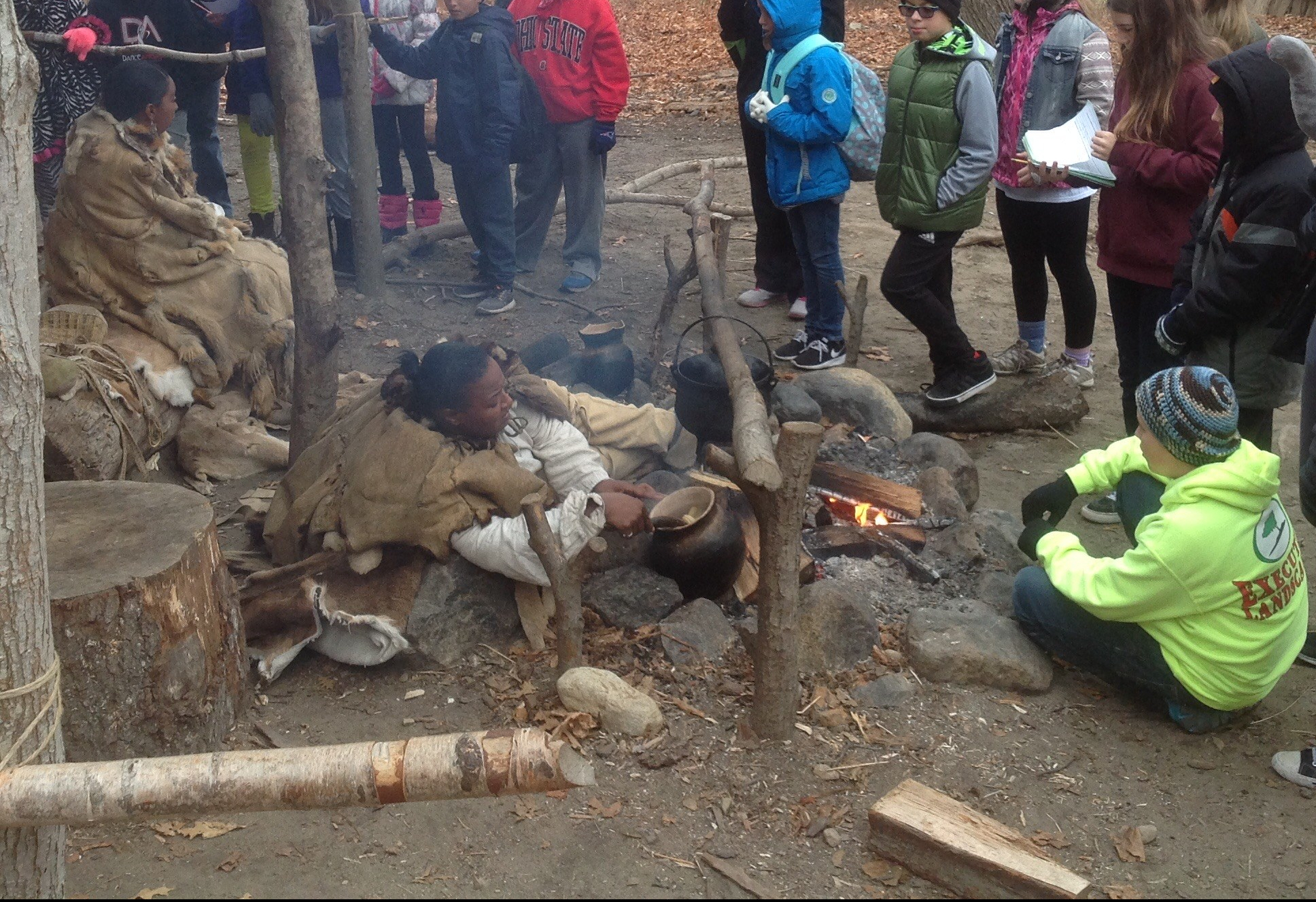
It's often the question, isn't it? For historians, of which I am not one, it must be the question that sends reasonable academics down rabbit holes, where subterranean historical societies meet and overstuffed armchairs line up next to roaring fireplaces. As a middle school language arts teacher, I've not often traveled to these complex spaces. … Continue reading Where to Begin?
The KENTUCKY and the Slave Trade
https://youtu.be/6sGYcAPymHU Built for Searsport, ME Captain Benjamin Carver, the KENTUCKY later went into the slave trade. Find out more in this video put together by Penobscot Marine Museum summer intern Lauren Taylor.
The Cesar Family
As I referenced in an earlier post, I am piloting a class on slavery in Connecticut/New England. It is going to be entirely project-based learning. My only required text is Anne Farrow, Joel Lang, and Jenifer Frank’s spectacular Complicity: How the North Promoted, Prolonged, and Profited from Slavery. At this inflection point, I feel fortunate … Continue reading The Cesar Family
A Public Archaeology: The Archaeology of Malaga Island
My field notes on display at the Maine State Museum Research centered on Malaga Island, in coastal Maine, in order to better understand the regional potential for assessment of the African-American experience in this portion of Casco Bay and Southwestern Maine. Given the shallow soils, dominant softwood forest and irregular rocky topography, much of the … Continue reading A Public Archaeology: The Archaeology of Malaga Island