

This powerful collection of essays brought to life with more than 150 illustrations investigates the intertwined legacies of slavery, freedom, and capitalism. In Slavery’s Wake frames the history of slavery in a global context to show how it created systems of oppression that continue to shape the world today.

ABB Atlantic World Connections Event | Dr. Seth Rockman on Plantation Goods: A Material History of American Slavery 10/23
The industrializing North and the agricultural South—that’s how we have been taught to think about the United States in the early 19th century. But in doing so, we miss slavery’s long reach into small New England communities, just as we fail to see the role of Northern manufacturing in shaping the terrain of human bondage in the South. Join us Wednesday for an introduction to Dr. Rockman's forthcoming book.
David Chesnut’s Library
By Eleanor Martinez-Proctor Research Fellow, Historic New England This post is a follow-up to research done on David Chesnut in 2022. See post, "Researching Black Histories from the Eustis Estate: Notes on Process." In 1903, David Chesnut Jr. was several years into his position at the Eustis Estate in Milton, working as a coachman alongside … Continue reading David Chesnut’s Library

Walking Tour Event | Brookline’s Hidden History of Slavery and Freedom on 10/27/24
This lively 90-minute tour visits three sites to tell the history and stories of slavery and freedom in Brookline, MA.

Brown University Event | Slavery & Legacy Community Walking Tour
In the eighteenth century, racial slavery permeated every aspect of social and economic life in Rhode Island. The Ruth J. Simmons Center for the Study of Slavery and Justice’s Slavery and Legacy Walking Tour invites guests to learn about the history and legacy of slavery as it pertains to Brown University and the state of Rhode Island.
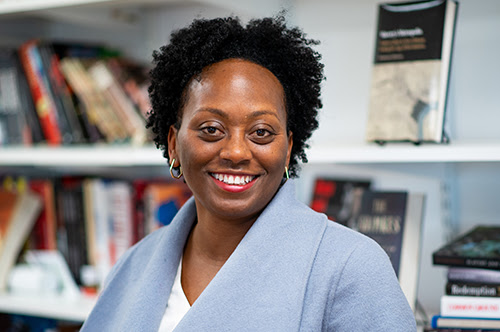
Radcliffe Event | Black Lead: The Radical Black Roots of New England Liberalism on 10/16/24
Kerri K. Greenidge’s new book complicates the idea—propagated by white nationalists and accepted as fact by most liberal-leaning historians, scholars, and commentators—that New England is a predominantly white space in which African descended people and their communities have had little political effect.
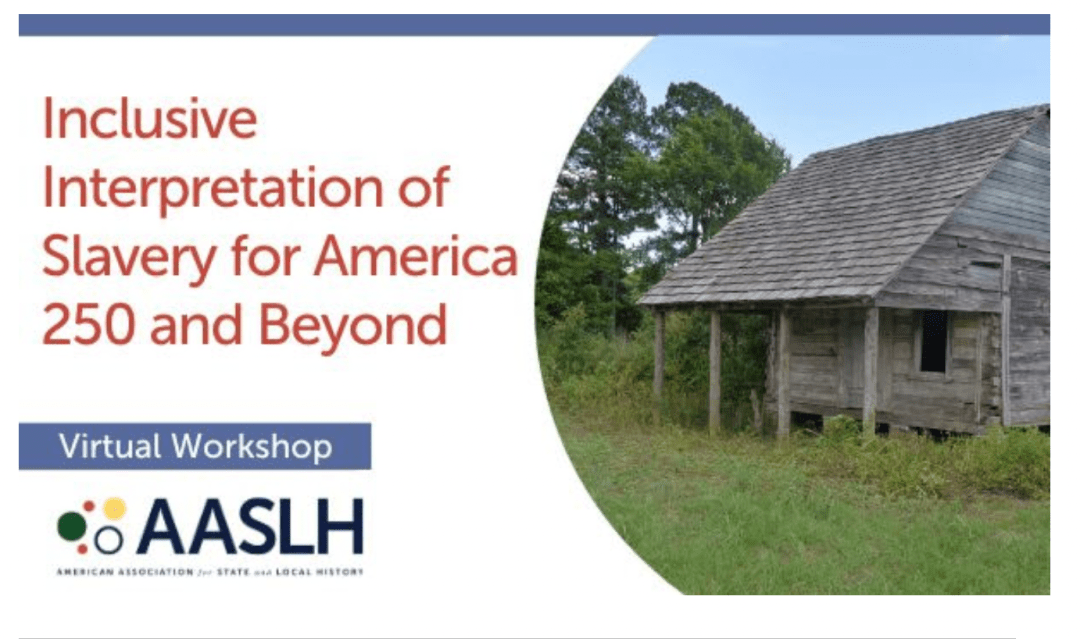
AASLH Event | Inclusive Interpretation of Slavery for America 250 and Beyond 10/30-31
Using the themes from AASLH’s Making History at 250: The Field Guide for the Semiquincentennial, we will explore ways to broaden visitors’ understanding of slavery and enslaved people’s lives during the Revolutionary Era, and the legacies of slavery that exist in our society today.
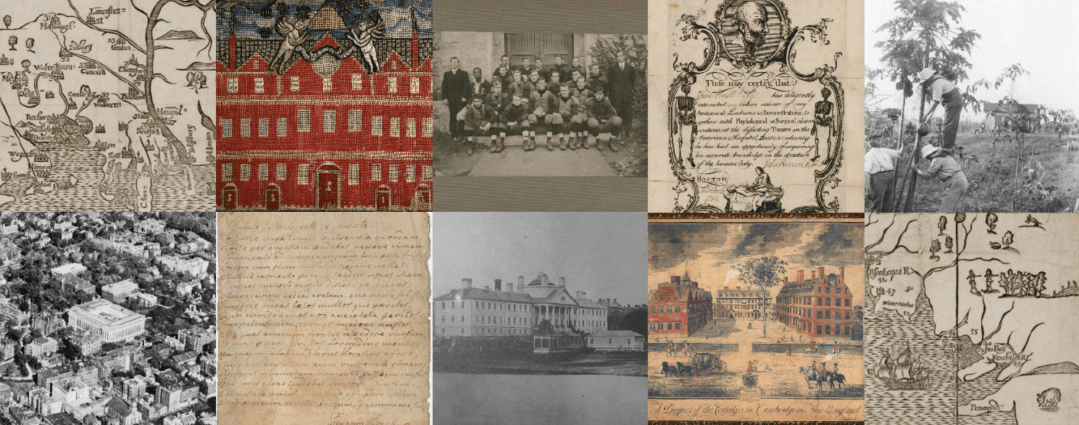
MHS Event | Racial Histories of Higher Education in New England: A Symposium Co-Hosted by The New England Quarterly on 9/27/24
As battles have raged over the meaning and fate of Confederate monuments across the south, colleges and universities in New England, generally regarded as liberal bastions, have also been engaged in a deep and consequential reckoning with aspects of their history and ongoing practices that rest on the legacies of slave trade and settler colonialism. This event will highlight the work of a diverse range of historians, as well as university archivists and museum professionals, discussing a range of issues from the Colonial period to the present that shape the industry, experience, and cultures of higher education.

Event | Slave Dwelling Project hosts 8th National Conference October 3-5 in Philadelphia, PA October 3-5
The 8th national Slave Dwelling Project Conference will take place October 3-5 in Philadelphia, Pennsylvania in collaboration with University of Pennsylvania’s McNeil Center for Early American Studies.
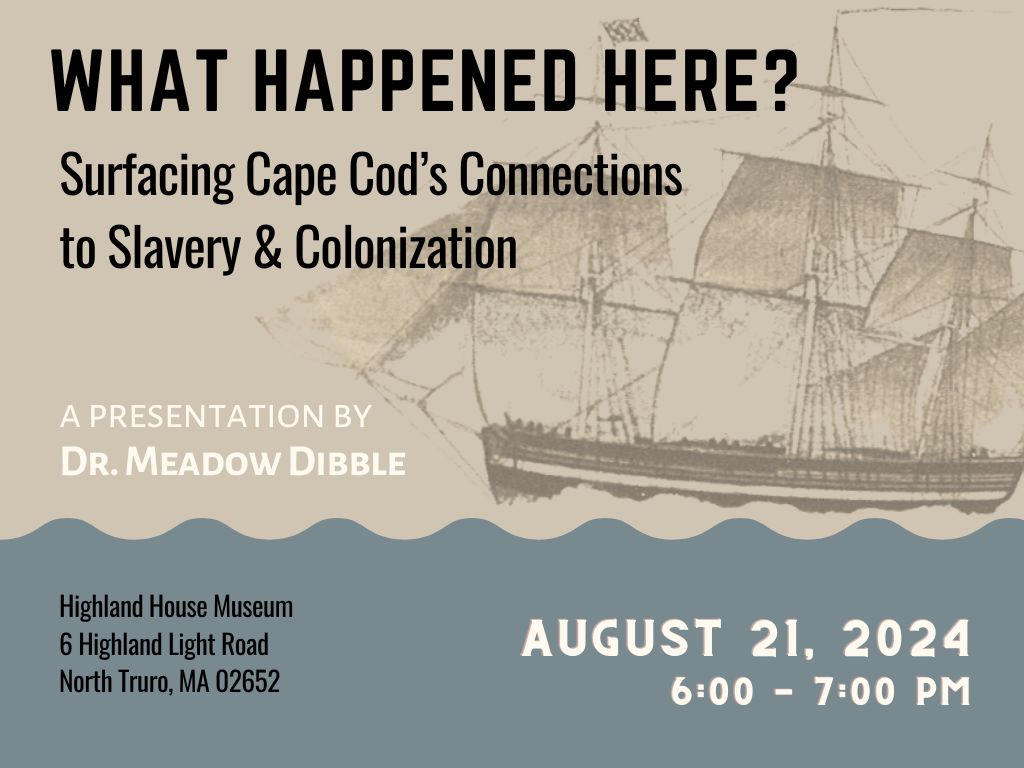
Truro Event | What Happened Here? Surfacing Cape Cod’s Connections to Slavery and Colonization with Meadow Dibble on 8/21
This Wednesday, Meadow Dibble will offer an overview of Cape Cod's entanglements in the global economy of enslavement at Truro's Highland House Museum.

Jesup Library Event | Eden’s Other Sons: MDI Seafarers, Shipbuilders, and the Slavery-Based Economies of the West Indies Trade with Anna Durand on 8/8/24
Mount Desert Island’s shipbuilders, sea captains, and sailors hold a special place in our collective memory. Hardworking and self-reliant, these men (and occasionally their wives) created a living from the sea. But historical records also show that trading Maine-made products like salt cod and barrel staves for rum, sugar, and molasses brought MDI seafarers into economic partnership with the slave-holding plantations of the West Indies.

Revolutionary Spaces Events: Daily Tour on Slavery and Resistance in Colonial Massachusetts
Uncover the realities of slavery and learn how enslaved people resisted oppressors at our newest tour, Slavery & Resistance in Colonial Massachusetts. Hear the compelling stories of figures like Scipio Gunney, Phillis Wheatley, and Belinda Sutton on this engaging 60-minute experience.

In the news: A family discovery connected two strangers and opened their eyes to NH’s history of slavery
A few years ago, a collection of old family letters led to a discovery that connected two strangers across the country who learned their family histories were connected by slavery in New Hampshire: one, the descendant of a man who was enslaved in Portsmouth; the other, a descendant from the family that enslaved him.
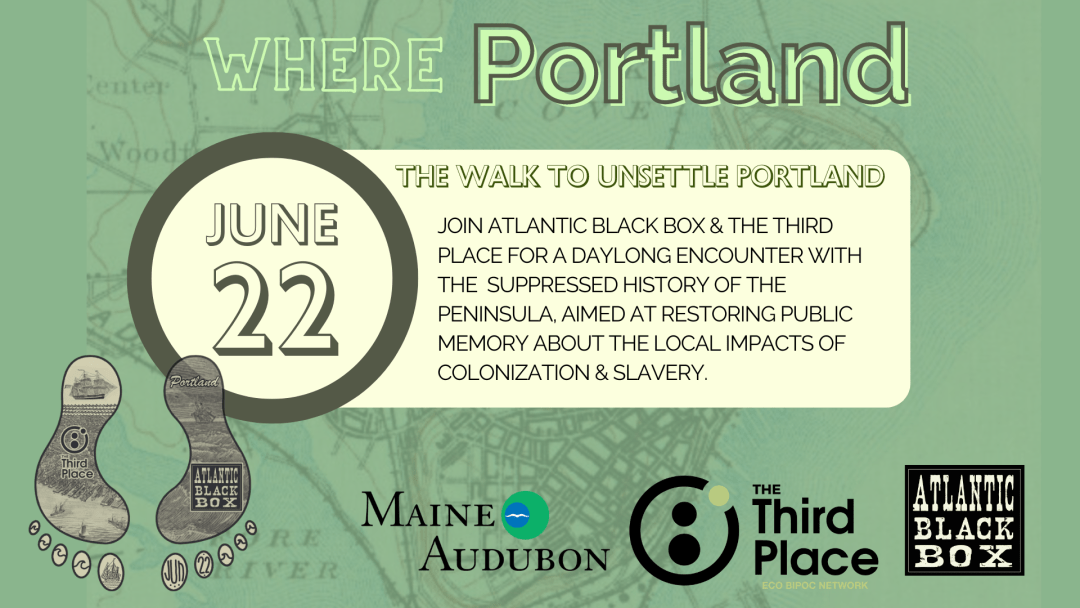
This Saturday: Join ABB & Partners for The Walk to Unsettle Portland
On Saturday, June 22, Atlantic Black Box and The Third Place’s EcoBIPOC Network invite you to join The Walk to Unsettle Portland, a daylong collective practice—at once physical, emotional, creative, and intellectual—in unsettling our understanding of this place by surfacing the suppressed stories of those who walked here before us. Please join us for all or part of the day.
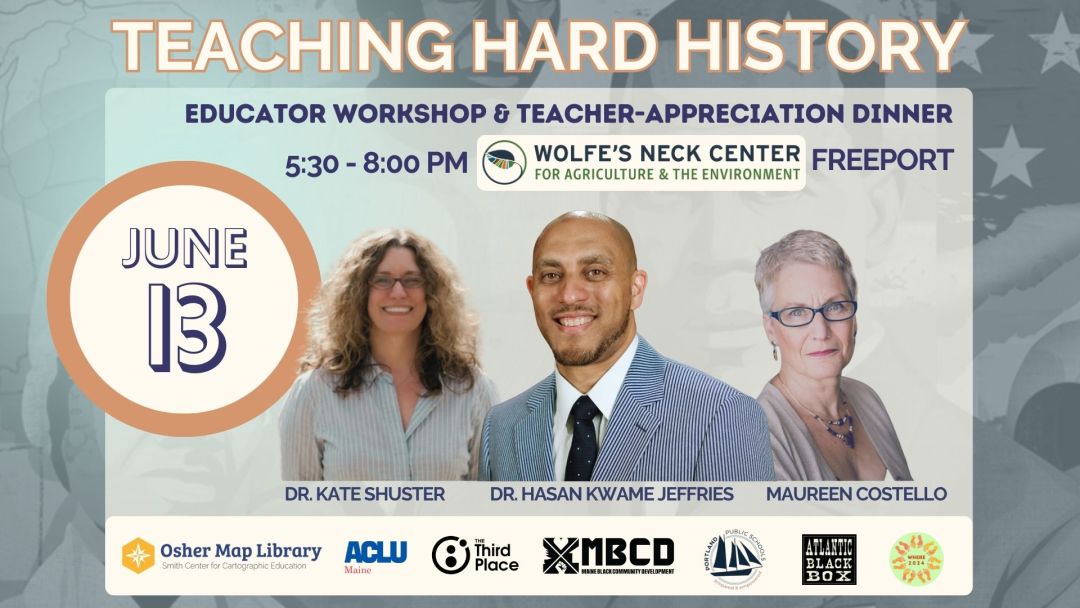
ABB Event | Teaching Hard History: Past, Present, and Future on 6/13
An educator workshop and teacher-appreciation dinner with Dr. Hasan Kwame Jeffries of The Ohio State University, Dr. Kate Shuster of the Hard History Project, and longtime education leader Maureen Costello.

American Ancestors Event | Paths to Freedom: Tracing Enslaved Ancestors to Emancipation on 6/6/24
Join 10 Million Names Volunteer Coordinator Danielle Rose to learn about the many invaluable collections of historical records that provide accounts (sometimes firsthand) of formerly enslaved individuals.
Revolutionary Spaces Event | Slavery & Resistance in Colonial Massachusetts Guided Tour
Introducing Revolutionary Spaces' newest offering: Slavery & Resistance in Colonial Massachusetts. This 60-minute guided tour takes you through the Old South Meeting House and Old State House to explore the complex dynamics of slavery in New England during the 17th and 18th centuries.
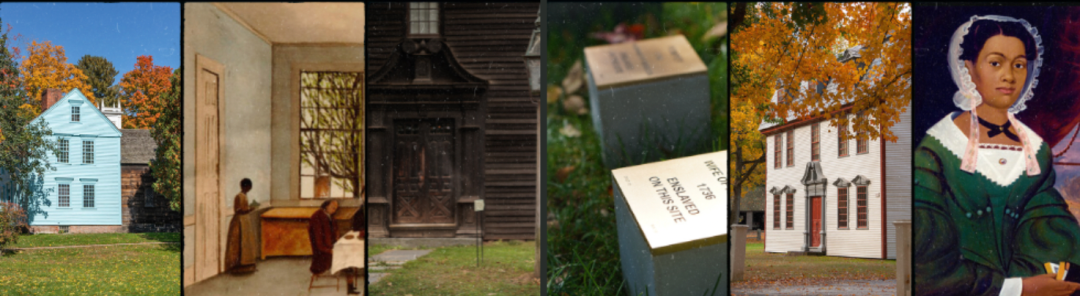
Slave Legacy History Coalition Event | Daytrip to Deerfield to View Unnamed Figures on 6/22
Spend June 22, 2024 with the Slave Legacy History Coalition and the New England Museum Association on an exciting day trip to Deerfield, MA to view Unnamed Figures: Black Presence and Absence in the Early American North.
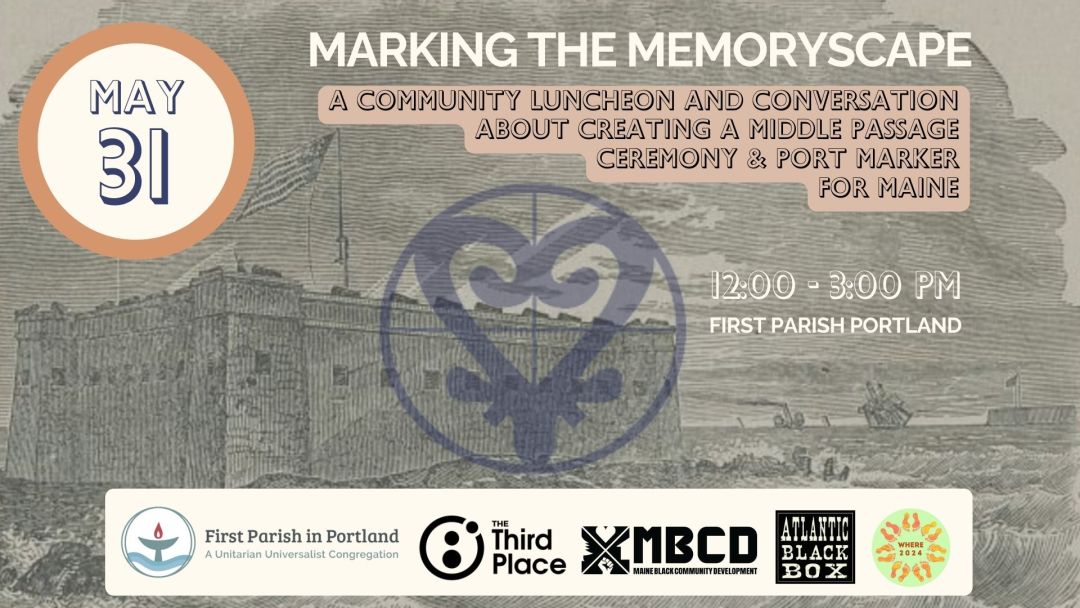
ABB Event | Marking the Memoryscape on 5/31/24
Hosted by Atlantic Black Box in partnership with Maine Black Community Development, The Third Place, First Parish Portland, & WHERE2024 Partners A community conversation and luncheon to discuss launching a Middle Passage Ceremony and Port Marker Project for Maine, with MPCPMP founder Ann Chinn and award-winning civil rights historian and activist Danita Mason-Hogans. Friday, May … Continue reading ABB Event | Marking the Memoryscape on 5/31/24

ABB Event | Healing the Wounds of Slavery on 5/30
On the 25th anniversary of the Interfaith Pilgrimage of the Middle Passage, founders Nobuntu Ingrid Askew and Sister Clare Carter will join Crossing the Waters Co-Director Dr. Sonji Johnson-Anderson and moderator June Thornton-Marsh for a screening of the documentary Rise Up and Call Their Names, which chronicles the extraordinary thirteen-month journey the founders led in 1998-1999 through the eastern United States, the Caribbean, Brazil, West Africa, and South Africa to reverse the direction of the Middle Passage symbolically and geographically.